सत्यनारायण कथा अध्याय 5 — राजा तुंगध्वज और समापन
सत्यनारायण कथा अध्याय 5 — राजा तुंगध्वज और समापन का उपलब्ध मूल पाठ दिव्य ग्रंथ पर पढ़ें। संस्करण और भाषा संबंधित पुस्तक के स्रोत नोट के अनुसार हैं।
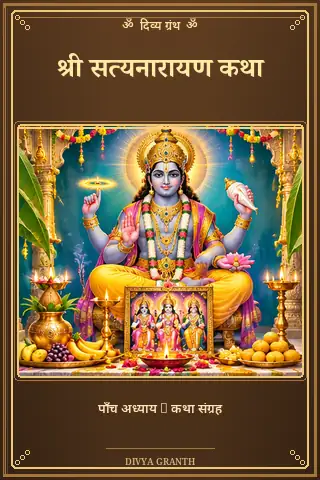
वन से लौटता राजा
कथा का अंतिम प्रसंग राजा तुंगध्वज से जुड़ा है। एक दिन वह वन से लौट रहा था। उसने वटवृक्ष के समीप ग्वालों को श्री सत्यनारायण की पूजा करते देखा। वे लोग बड़े राजसी साधन के बिना अपनी श्रद्धा से पूजा कर रहे थे और कथा सुनने के बाद प्रसाद बाँट रहे थे।
The final episode tells of King Tungadhwaja. Returning from the forest, he passed a banyan tree where cowherds were worshipping Satyanarayan. They had no royal grandeur, only simple offerings and attentive devotion. When the story had been heard, they began to share prasad.
अहंकार से अस्वीकार
ग्वालों ने राजा को देखा तो प्रसाद लेने का निमंत्रण दिया। राजा ने अपने पद के गर्व में उनकी उपासना को तुच्छ समझा और प्रसाद को आदर से नहीं लिया। वह अपने मार्ग चला गया। इस प्रसंग में साधारण लोगों की पूजा को कम आँकने वाले अहंकार को मुख्य दोष के रूप में दिखाया गया है।
The cowherds respectfully offered the king some prasad. Because of his pride, he looked down on their gathering and declined the offering without respect. He went on his way. The story draws attention to the arrogance of judging devotion by a person's social standing.
संकट का आगमन
कथा कहती है कि इसके बाद राजा को धन और परिवार से जुड़ी भारी विपत्ति का सामना करना पड़ा। उसने अपने जीवन के हाल के व्यवहार पर विचार किया। उसे वन के पास का दृश्य याद आया जहाँ साधारण ग्वाले श्रद्धा से पूजा कर रहे थे। उसे लगा कि उसने उनकी भक्ति और आतिथ्य दोनों का अपमान किया है।
According to the sacred account, the king then suffered severe losses affecting his prosperity and family. Thinking back over his conduct, he remembered the gathering of cowherds under the tree. He recognized that he had insulted not only an offering but also the sincere devotion and hospitality of those who had welcomed him.
राजा की वापसी
राजा ने घमंड छोड़कर उन्हीं ग्वालों के पास लौटने का निश्चय किया। उसने आदरपूर्वक उनकी पूजा में भाग लिया, सत्यनारायण की कथा सुनी और प्रसाद स्वीकार किया। अब वह राजपद की ऊँचाई से नहीं, एक सामान्य उपासक की नम्रता से बैठा। कथा में इसी परिवर्तन को उसके जीवन का निर्णायक क्षण माना गया है।
The king set aside his pride and returned to the cowherds. He joined their worship with respect, heard the Satyanarayan story and accepted prasad. Instead of standing apart as a ruler, he participated humbly among them. This change of attitude becomes the turning point of the final chapter.
क्षमा और पुनर्स्थापन
परम्परागत कथा में उसके सुख और परिवार की स्थिति फिर सुधरती बताई गई है। यह परिणाम कहानी का धार्मिक विधान है, किसी व्यक्तिगत जीवन की सुनिश्चित गारंटी नहीं। उसका गहरा संदेश यह है कि विनम्रता, सत्य, संकल्प और सम्मान मनुष्य को दूसरों के निकट लाते हैं; प्रसाद साझा करना भी उसी बराबरी की भावना का प्रतीक है।
The traditional narrative tells of his fortunes and family being restored. This is part of the sacred story, not a guarantee of a particular material outcome for every modern reader. Its deeper teaching concerns humility, truth, fulfilled promises and the dignity of other people. Sharing prasad becomes a sign of that equal respect.
पाँच अध्यायों का समापन
सूतजी ने ऋषियों से कहा कि यह व्रतकथा श्रद्धा से सुनी जाती है और पूर्ण होने पर प्रसाद सबमें बाँटा जाता है। नारद का प्रश्न, निर्धन ब्राह्मण और लकड़हारे की आस्था, व्यापारी का भुला वचन, कलावती का प्रसाद और राजा का अहंकार—ये पाँचों अध्याय एक सूत्र में जुड़े हैं। कथा सुनकर कृतज्ञता, सत्य और सेवा को अपने आचरण में उतारना ही इसका मानवीय सार है।
Suta concluded his account to the listening sages. From Narada's compassionate question, through the poor Brahmin and woodcutter, the merchant's postponed promise and Kalavati's prasad, to the proud king's return, all five chapters share a thread. The story invites families to listen with care, share the offering and carry truthfulness, gratitude and service into daily life.